The Memory Palace Hotel, Mastering Pointers in C
A story-driven introduction to pointers in C, explaining memory, addresses, and efficient data handling concepts.
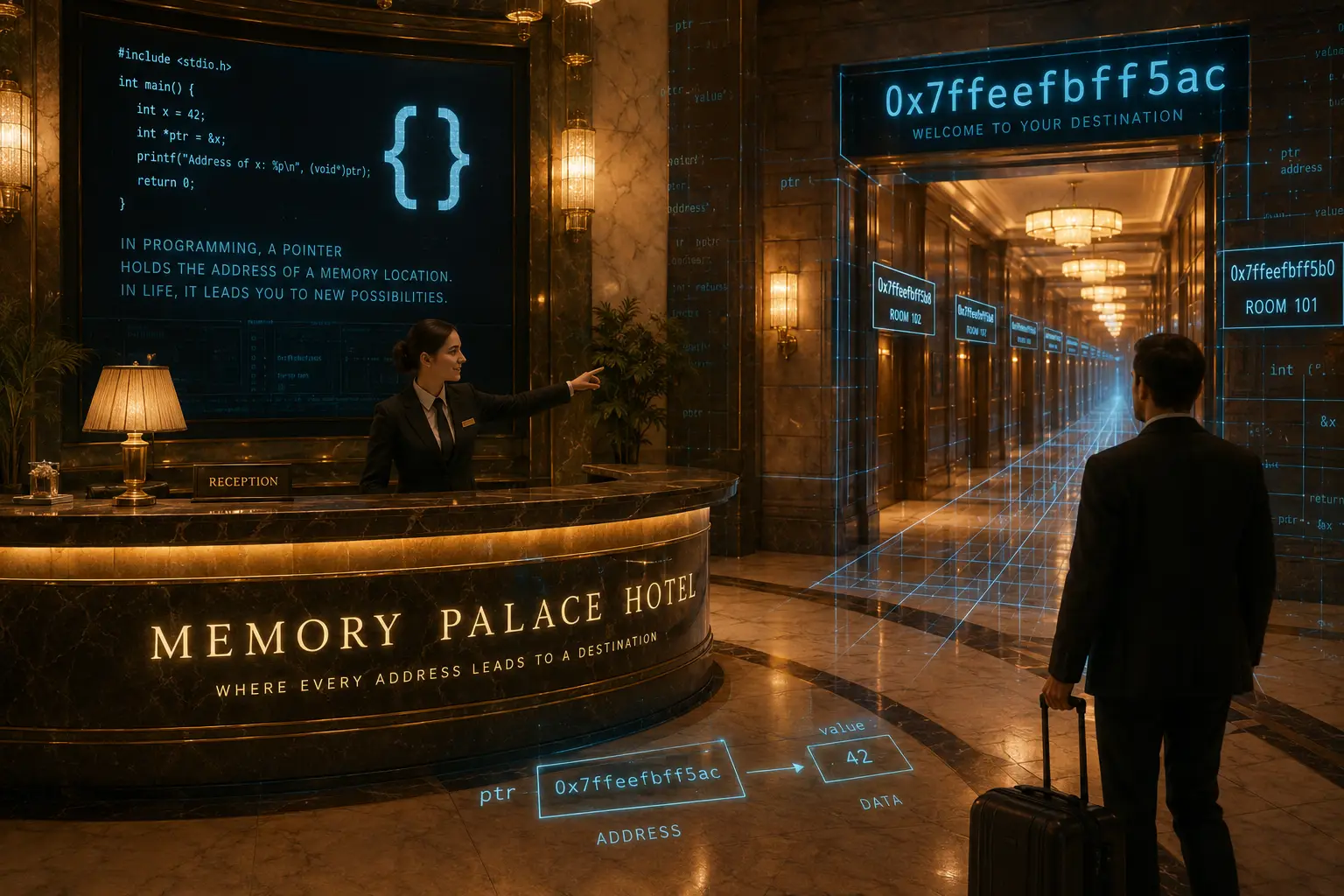
In a quiet coastal area, there is a grand hotel known for its perfect organization. Every guest who arrives is assigned a room, but interestingly, the staff rarely speak about the guests themselves. Instead, they refer to room numbers.
This hotel runs much like pointers in programming.
In the memory of a computer, data is stored in specific locations called memory locations, much like guests in rooms. Simply put, a pointer is a variable that stores the memory address of another variable, not the value itself. Rather than storing your name, it stores your room number. These memory addresses are typically represented in hexadecimal format (example: 0x7ffeefbff5ac), which makes them easier for humans to read and work with.
This allows programs to efficiently locate and manipulate data without duplicating it.
Pointers work by referencing memory addresses. When you declare a pointer in C, for example:
int *ptr;
you are creating a variable "ptr" that can store the address of an integer. If you assign it:
ptr = &x;
it now "points" to the memory location of "x". You can then access or modify the value stored at that memory location using *ptr. This dual nature of storing a memory address and dereferencing it is what makes pointers powerful.
But why does this matter?
Imagine a hotel manager who wants to change the details of a guest. Without wasting time and space by copying the guest into a new room, the manager simply uses the room number to directly access and update the information. In a nutshell, pointers enable efficient memory usage, dynamic data structures (like linked lists and trees), and faster function operations by passing references rather than copies.
The concept of pointers became foundational with the C programming language. C opened up a new playground for programmers by granting direct access to memory through pointers, making it extremely powerful for system level programming. Operating systems, embedded systems, and performance critical applications rely heavily on this capability. While modern programming languages often hide pointers behind abstractions, understanding them through C allows programmers to experience how memory truly works under the hood.
So next time you see a variable, remember it lives somewhere, and pointers know exactly where to find it.